The VLA Revolution: One Brain for Every Robot
π0.7, GR00T N1.7, Gemini Robotics — Vision-Language-Action models now train once across many robots and adapt to a new one with a LoRA fine-tune. The bottleneck moved from the model to the data. Here's the architecture shift, the numbers, and why collecting alone is a losing strategy.
By Tbrain Research
For years, every robot task meant a bespoke policy: a fresh model, a fresh dataset, a fresh six months. Vision-Language-Action models tore that up. The new goal is a single brain — train once across many robots and many tasks, then adapt it to a new machine with a little fine-tuning, the same way you'd adapt a language model to a new domain.

From bespoke policies to generalist brains
A VLA takes in what the robot sees plus a natural-language instruction, and emits actions. The bet is the same one that made LLMs work: generality comes from broad, diverse data, not from hand-tuning one task at a time. Physical Intelligence's π0 proved it — a first generalist policy trained across seven robot platforms and a spread of dexterous tasks. Open X-Embodiment pushed the pooling idea to its limit, uniting over a million trajectories from dozens of datasets across 22 robot types.
The trajectory since has been steep. π0 gave way to π0.5 and its open-world generalization — cleaning a kitchen or bedroom it had never seen (arXiv 2504.16054) — and in April 2026 to π0.7, a steerable foundation model framed around a step-change in cross-embodiment generalization. Physical Intelligence has raised more than $400M on a single wager: that one policy could eventually drive any robot on any task, "just like you can ask a chatbot."
The architecture shift that made it click

Early VLAs like RT-2 and OpenVLA predicted actions as discrete tokens — quantized, choppy, awkward for contact-rich work. The π-series swapped that for flow matching: a mechanism that generates smooth, continuous action trajectories far better suited to folding laundry or seating a connector.
NVIDIA's GR00T line took a complementary path — a dual-system design borrowed from how people think:
- System 2 — a vision-language backbone that interprets the scene and the instruction.
- System 1 — a diffusion transformer that turns that understanding into fluid, real-time motor actions.
| Model family | Action generation | Best at |
|---|---|---|
| RT-2 / OpenVLA | Discrete action tokens | Early generalist proof; coarse control |
| π-series (π0 → π0.7) | Flow matching (continuous) | Smooth, contact-rich manipulation |
| GR00T N1.x | Dual-system: VLM + diffusion | Real-time humanoid control, open weights |
The numbers moved fast. GR00T N1.7 ships as a 3-billion-parameter open checkpoint, pretrained on ~32K hours of real and egocentric human data plus ~8K hours of simulation, and reports gains like DROID-F6 +61% over the prior version. Its predecessor N1.5, trained on just 30 demonstrations per task in RoboCasa, hit 47.5% success versus 17.4% for N1 — and was assembled in 36 hours on synthetic data that would have taken three months to collect by hand. A 60× turn of the crank.
The moment a policy transfers across bodies, the scarce resource stops being the model and becomes the data that teaches a new body how it moves.
Cross-robot transfer is the commercial punchline

Because the policy is embodiment-general, standing up a new robot mostly needs a modest set of ground-truth demonstrations and a low-rank fine-tune (LoRA) — not a training run from scratch. That is what turns "one brain for every robot" from a slogan into a procurement plan. The competitive field is crowding to exploit it — Gemini Robotics, MolmoAct2's action-reasoning approach, Hy-Embodied's real-world stack — but they all draw from the same well: large, diverse, standardized, multi-embodiment data.
What open-world generalization actually required
π0.5's headline demo — walking into a kitchen or bedroom it had never seen and tidying up — didn't come from a bigger model. It came from a broader data diet: heterogeneous training across multiple robot platforms, web-scale semantic data, and verbal instructions, so the policy learned concepts ("wipe the counter," "put it away") that survive a change of scene. The lesson that keeps repeating across π0.5, GR00T, and Gemini Robotics is the same one: generalization is bought with diversity of data, not depth of per-task tuning.
That is also why a modest, clean, task-specific set can adapt one of these models so cheaply. Once the base policy already understands objects, verbs, and contact, a LoRA fine-tune on a few hundred pristine demonstrations teaches it the one new body or task you care about — and the whole cost of the project collapses onto the quality of those few hundred episodes. A single mislabeled grasp is a rounding error at 300,000 episodes and a real problem at 300.
Standardization is the unglamorous key

Pooling only works if the data speaks one language. The field converged on two formats: RLDS (from Open X-Embodiment — the format OpenVLA, Octo, and most open frameworks expect) and the LeRobot dataset schema from Hugging Face. Data that isn't exported to one of these can't flow into a modern training pipeline without a painful conversion tax — and that tax is exactly what strands otherwise-valuable datasets.
Why collecting alone is a losing move
Here's the strategic consequence. Scaling studies keep finding that diversity, not raw count, drives generalization. A lab collecting in isolation — one robot, one lab, one set of lighting conditions — builds a policy that overfits its own hallway. A lab that pools standardized data from many embodiments, environments, and operators builds one that travels. And the union of today's open corpora still isn't sufficient for deployment-grade generalization, which is precisely why task-specific, well-formatted data has become the bottleneck rather than the model.
What this means if you're building
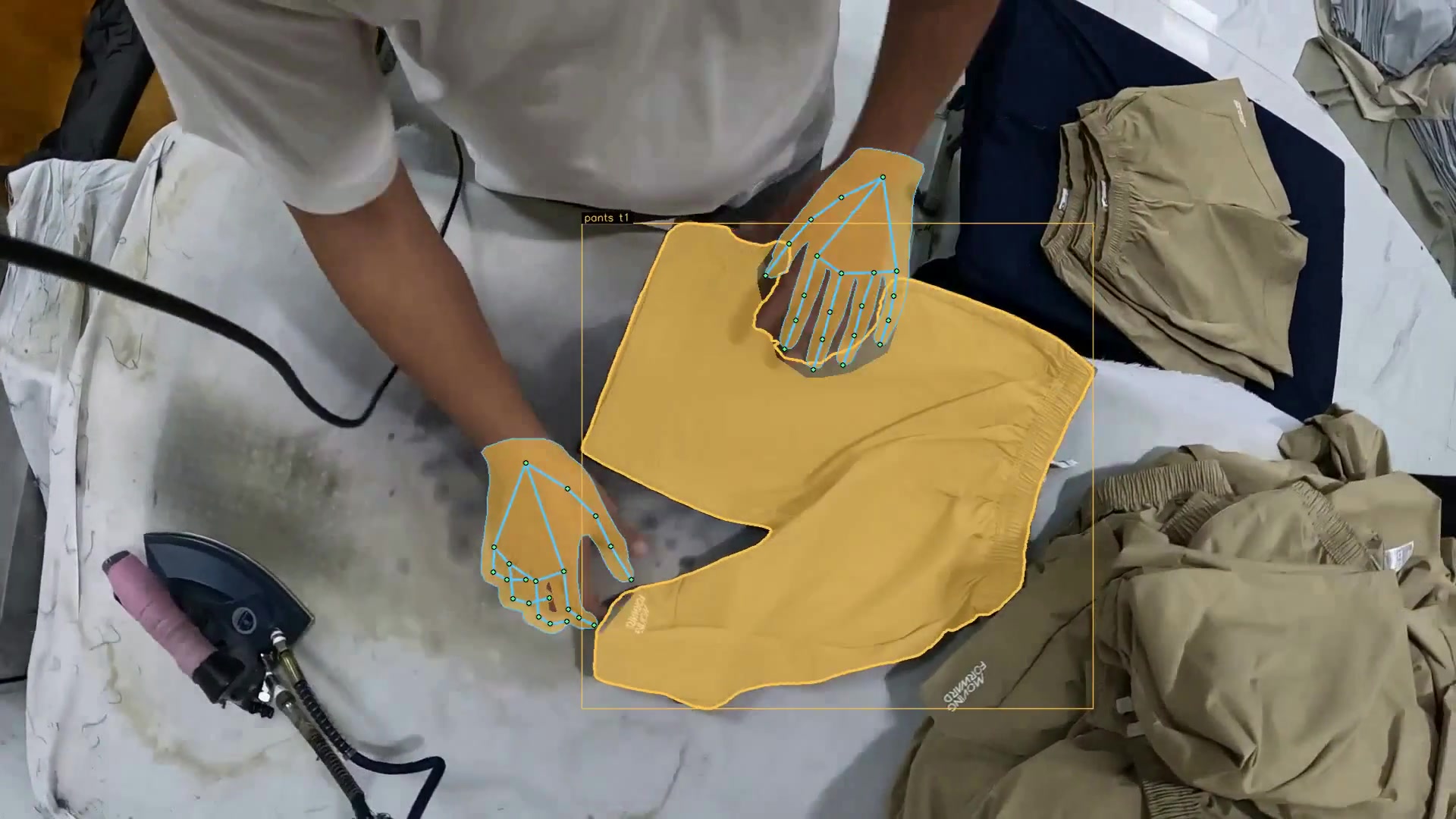
If you're training or fine-tuning a VLA in 2026, the questions that matter aren't "how many episodes" but "how diverse, how clean, and in what format." That's the foundry Tbrain is built for: action-paired demonstrations across a range of embodiments and real production environments, QC'd against 15 hard rules, and delivered RLDS- or LeRobot-ready — no conversion contract, no proprietary lock-in.
One brain for every robot only works if every robot's data can reach the brain. Standardized, diverse, QC'd data is how it gets there. Tell us the task and the embodiment; we'll scope a sample batch.
Building a robotics dataset?
Tell us the task and the robot. We'll scope capture, QC and delivery (LeRobot / RLDS) with you.