Data Quality Is the Hidden Moat in Physical AI
DROID took 13 institutions and 12 months to collect 76,000 clean episodes. Cheap data farms ship whatever they record. AI-native QC — rejecting the broken 20–30% before a human looks — is what separates lab-grade data from noise, and in 2026 automation is quietly rewriting the economics of the moat.
By Tbrain Research
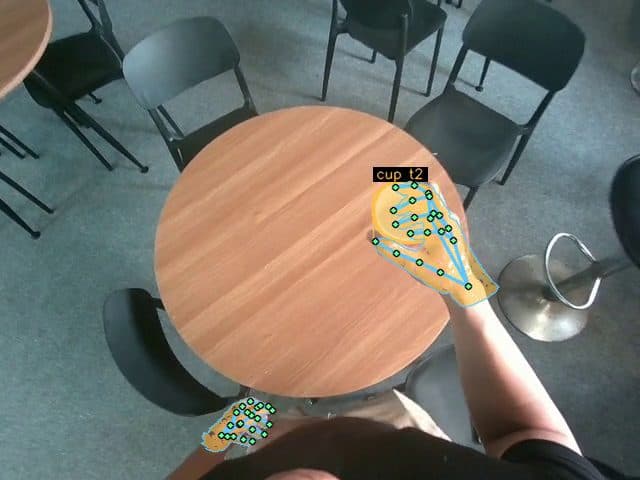
Imitation learning has an uncomfortable property: a policy copies its data, flaws and all. Bad sync, occluded hands, tracking drift, a botched demonstration — none of it just adds harmless noise. It teaches the robot the wrong thing. Garbage demos make garbage policies, faithfully.
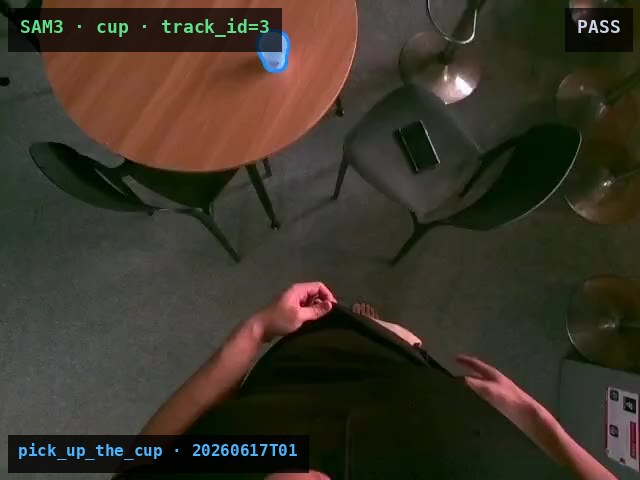
cup · track_id=3, PASS). Clean or drifting, only a check tells you which.Why "cheapest per episode" is a trap
The instinct is to optimize for price per demonstration. It's the wrong objective. The real cost of a bad episode shows up downstream: a lab that trains on unfiltered data burns compute and ships a worse model, then pays again to find out why. The defensible value in robot data was never volume. It's verified quality — and the gap between the two is where the moat lives.
The 2026 numbers confirm the shape of the problem. Most manipulation tasks need between 300 and 1,200 high-quality demonstrations to generalize across the bulk of in-distribution variation. Commercial campaigns are sized to match — 500 to 5,000 clean trajectories per task, delivered in two to six weeks in RLDS or LeRobot format. Miss on quality and every one of those trajectories is a liability, not an asset. Usable-data pricing reflects the difficulty: roughly $15–30/hr for simple 2D teleop, and $80–150/hr for multi-sensor humanoid manipulation.
The gold-standard datasets are expensive for a reason
Look at what "good" actually costs to produce:
| Dataset | Episodes | Collection | How |
|---|---|---|---|
| DROID (2024) | 76,000 (350 hrs) | 12 months | 13 institutions, 50 operators, standardized Franka + shared protocol |
| RT-1 (Google, 2022) | 130,000 | 17 months | 13 robots, scripted teleoperators |
DROID's protocol was engineered specifically to prevent the dumb, ubiquitous failures — "camera cannot see robot," "teleoperator in camera view." Even then, downstream users filter hard: one well-known pass keeps language annotations for 95% of successful episodes and applies an idle-frame filter, leaving 74,604 valid episodes. The lesson is blunt — clean data at scale is a manufacturing discipline, not a recording session.
Quality isn't one number. It's scale, sensor and rig cleanliness, action-space consistency, licensing, and ecosystem fit — and no dataset wins on all of them at once.
The union of open datasets still isn't enough
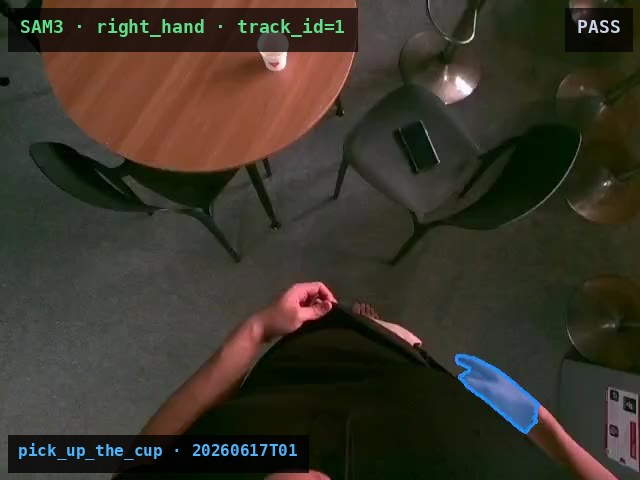
right_hand · track_id=1, PASS) is the only way to know it held.It's tempting to think the open corpora solved this. They didn't. Open X-Embodiment, DROID, and the growing pile of LeRobot community datasets are each genuinely valuable — but a recent generalist-VLA analysis put it bluntly: none individually, nor their union, is sufficient for training a model meant for real-world deployment. Every production team eventually hits the same wall and needs task-specific, high-QC data that open datasets simply can't provide.
AI-native QC flips the economics

Here's the 2026 shift that's quietly changing everything. Quality scoring is going semi-automated. Replay-and-annotation pipelines matured to the point where raw operator streams become RLDS-formatted episodes with automated quality scoring — cutting annotation labor 40–60% versus 2024 workflows. LeRobot's latest release ships "Robometer," a general-purpose reward model built on Qwen3-VL-4B and trained over more than a million trajectories, that scores task progress and success from raw video plus a language instruction, with no task-specific training required.
The pattern that works layers machine and human judgment instead of choosing between them:
- A confidence model scores every demonstration and auto-rejects the 20–30% that are broken before a human ever opens them.
- Machine-checkable hard rules gate the objective failures — desync, missing frames, out-of-range world scale, dropped tracks. (Tbrain runs 15 of them per capture.)
- Human reviewers spend their scarce attention on genuine edge cases, not obvious garbage — annotator, reviewer, audit.
- Everything exports to RLDS or LeRobot so a frontier lab can train on it directly.
Why the QC layer is hard to copy
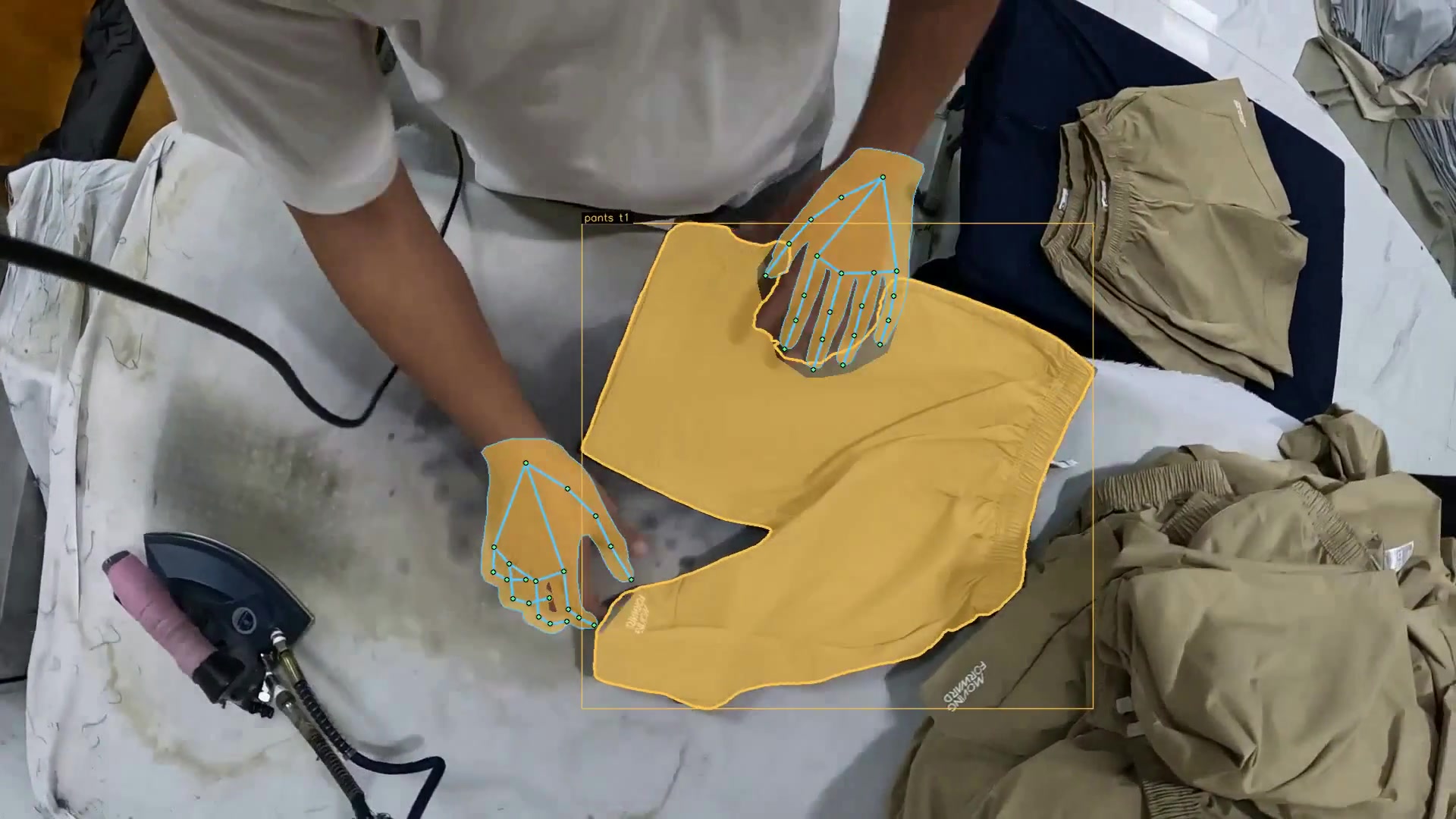
Automation lowers the labor cost of QC — but it raises the expertise bar. Robot demonstrations have failure modes invisible to a general reviewer but obvious to someone who understands kinematics: an incomplete grasp, a demo that fails at the critical moment, a sensor-sync drift that corrupts the action representation. Building a gate that reliably catches those takes domain knowledge a low-cost data farm doesn't have and can't quickly buy.
The real moat isn't the price, and increasingly isn't even the labor. It's the judgment encoded in the pipeline.
The vendor landscape, honestly
The market has stratified. Scale AI positions its "Physical AI Data Engine" as the infrastructure layer — an end-to-end pipeline from raw teleop sessions to annotated, training-ready sets, leaning on its history in autonomous-driving annotation. Shaip and similar players lean on large global contributor networks (500K+) for multimodal collection and labeling. APAC-native shops like DataX Power ship pre-built datasets in HDF5/RLDS. They're not interchangeable: an annotation-volume vendor is optimized for throughput, not for catching a sensor-sync drift only a robotics engineer would notice. When you evaluate a data partner, the org chart matters as much as the price sheet — who on their team can look at a trajectory and know it's quietly broken?
A buyer's checklist for 2026
If you take one thing from this: change the questions you ask a data vendor. Instead of "how much per episode," ask:
- What's your reject rate, and what fraction is caught automatically versus by a human?
- Which checks are machine-enforced — sync, world-scale bounds, dropped tracks, idle-frame trimming?
- Who reviews the survivors, and do they understand robot kinematics or just draw boxes?
- What ships with each episode — a QC report, the manifest, the failed checks — or just the video?
- What's the native export format, RLDS or LeRobot, and is there a conversion tax?
What this means if you're building

If you're buying robot training data in 2026, stop asking for the lowest price per episode and start asking how the vendor rejects a bad one. Ask what runs automatically, what a human actually reviews, and what the reject rate is. That's the foundry Tbrain is built around: real capture, an AI-native QC pipeline with 15 machine-checkable hard rules plus layered human review, world-scale and depth sanity checks, and delivery in the exact formats your training loop expects — in ≤48 hours. Cheap data is easy. Data a frontier model can train on directly — that's the moat. Ask us for a sample and see the QC report that ships with it.
Building a robotics dataset?
Tell us the task and the robot. We'll scope capture, QC and delivery (LeRobot / RLDS) with you.